Battery R&D Solutions.
Precision tools for every stage of battery R&D — from materials to full-cell validation.
How BioLogic covers the R&D Battery stages?
Materials & components research
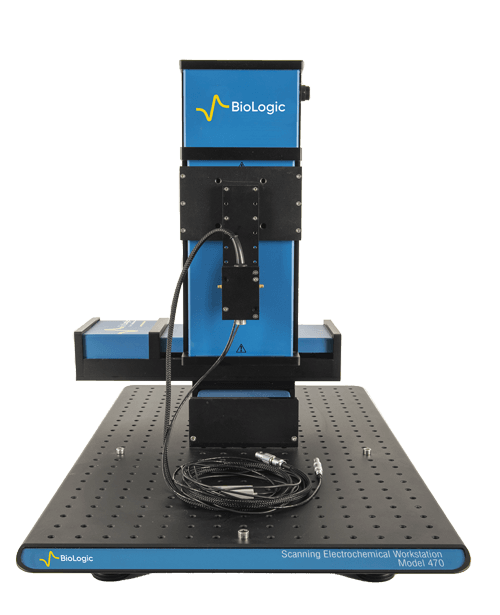

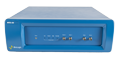
MTZ-35
Atmospheric and pressure control
Compatible with temperature control units
EIS up to 35 MHz

CESH-e (Enhanced Controlled Environment Sample Holder)
An innovative, multi-use sample holder for electrical & electrochemical characterization with high reproducibility

HTCC
High Temperature Conductivity Cell
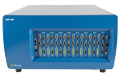
VMP-300 Potentiostat

EC-Lab® Software
EC-Lab® is the benchmark control and analysis software developed by BioLogic for Potentiostat/Galvanostat instruments
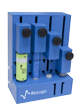
BH-1i
Universal battery holders
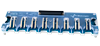
CCH-8
8 position and 4 point coin cell holder
Fundamental investigations of full cells
VMP-300 Potentiostat
EC-Lab® Software
EC-Lab® is the benchmark control and analysis software developed by BioLogic for Potentiostat/Galvanostat instruments
BH-1i
Universal battery holders
CCH-8
8 position and 4 point coin cell holder
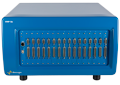
VMP-3e Multichannel Potentiostat

SAM-50
Stack up to 60 V
EC-Lab® Software
EC-Lab® is the benchmark control and analysis software developed by BioLogic for Potentiostat/Galvanostat instruments
BH-1i
Universal battery holders
CCH-8
8 position and 4 point coin cell holder
CESH-e (Enhanced Controlled Environment Sample Holder)
An innovative, multi-use sample holder for electrical & electrochemical characterization with high reproducibility
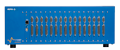
MPG-200 Premium Research Battery Cyclers
SAM-50
Stack up to 60 V
EC-Lab® Software
EC-Lab® is the benchmark control and analysis software developed by BioLogic for Potentiostat/Galvanostat instruments
BH-1i
Universal battery holders
Proof of concept studies of full cells
VMP-300 Potentiostat
EC-Lab® Software
EC-Lab® is the benchmark control and analysis software developed by BioLogic for Potentiostat/Galvanostat instruments
BH-1i
Universal battery holders
CCH-8
8 position and 4 point coin cell holder
VMP-3e Multichannel Potentiostat
SAM-50
Stack up to 60 V
EC-Lab® Software
EC-Lab® is the benchmark control and analysis software developed by BioLogic for Potentiostat/Galvanostat instruments
BH-1i
Universal battery holders
CCH-8
8 position and 4 point coin cell holder
CESH-e (Enhanced Controlled Environment Sample Holder)
An innovative, multi-use sample holder for electrical & electrochemical characterization with high reproducibility
MPG-200 Premium Research Battery Cyclers
SAM-50
Stack up to 60 V
EC-Lab® Software
EC-Lab® is the benchmark control and analysis software developed by BioLogic for Potentiostat/Galvanostat instruments
BH-1i
Universal battery holders
Commercial cell validation & aging
BCS-900 Premium Battery Cyclers

EC-Lab® Software
EC-Lab® is the benchmark control and analysis software developed by BioLogic for Potentiostat/Galvanostat instruments
BH-1i
Universal battery holders
CCH-8
8 position and 4 point coin cell holder
Need a quotation?
Request a quote and take advantage of our personalized advice and get the data you need to make informed decisions.
Why choose BioLogic?
Modular ranges
The M470 can be configured with any of 7 differents modules, to work with 9 different techniques. BioLogic’s potentiostats are “>modular (upgradable in-situ), extend range with boosters. Different BCS-900 modules can be combined in a single cabinet, for users to build a custom-made battery cycling system.
Integrated climate chamber management
To better understand the performance and lifespan of batteries testing under controlled environmental conditions is required. The TCU Server integrates with EC-Lab® and BT-Lab® to provide direct control of climatic chambers and other temperature control units.
High-speed CC-CV shift
For both BioLogic’s potentiostats and cyclers, a unique design enables an ultra-fast shift from galvanostat mode to potentiostat mode to perform the best CC-CV technique, avoiding any transient phenomena on the battery.
Powerful softwares
With EC-Lab®, set safety limits, choose the control mode and measure all potentials (Ewe, Ece, Ewe-Ece) and related variables, modify your setting as the experiments run. BT-Lab® Suite enables on-site and remote access, batch data analysis, and easy reporting.
Powerful EIS capabilities
Native EIS on BCS-9xx. Interpret and model EIS data using ZFit. Make reliable impedance measurements using BioLogic’s EIS Quality Indicators. GEIS-AA technique: enables to avoid non-linear behavior for time-variant systems (AA meaning amplitude adaptation).
High precision calculation / Data of interest
EC-Lab® and BT-Lab® help you to identify key data of interest such as battery cycle life, Coulombic efficiency, capacity and dQ/dV. Data of interest are directly process in the firmware, allowing better accuracy.
FAQ.
What frequency range is relevant for Electrochemical Impedance Spectroscopy (EIS) measurement when characterizing batteries?
In battery research, the most relevant frequency range typically is from 10 kHz to 10 mHz:
- high-frequency range (10 kHz – 1 kHz) provides insights into solution resistance and electrolyte conductivity
- mid-frequency range (1 kHz – 100 mHz) shows charge transfer processes and electrode kinetics
- low frequency range (100 mHz – 10 mHz) indicates mass transport limitations and diffusion processes.
Note: Very high-frequency ranges (up to few MHz) is relevant only for solid-state batteries and gives insights into solid ionic conductors.
For the optimal solution, we strongly recommend contacting our sales teams to discuss how we can support your current projects, they can provide personalized recommendations based on your application needs.
What tools can help me model real-life battery cycles?
Simulating complex battery cycles that model real-life activity is essential in battery development. BioLogic solutions feature special tools to import specific profiles instead of manually creating a protocol with thousands of steps:
Urban Profile in EC-Lab software for potentiostat,
and Arbitrary User Profile in BT-Test software for battery cycler.
Interested battery ageing? Learn here how you can simulate ripple current with EC-Lab®.
For the optimal solution, we strongly recommend contacting our sales teams to discuss how we can support your current projects, they can provide personalized recommendations based on your application needs.
Can I use a BioLogic instruments to conduct in operando XRD measurement?
At Biologic, we combined the use of a high-quality X-ray diffractometer from partners with our SP-50e/150e potentiostats. With this set up researchers are able to perform in operando XRD measurements on pouch and coin cells during charge and discharge cycles to monitor structural changes in the electrode materials.
For the optimal solution, we strongly recommend contacting our sales teams to discuss how we can support your current projects, they can provide personalized recommendations based on your application needs.
 Read the article
EIS and Battery Screening
Article describing how advanced EIS battery cyclers can play a multipurpose role in battery screening.
 Read the article
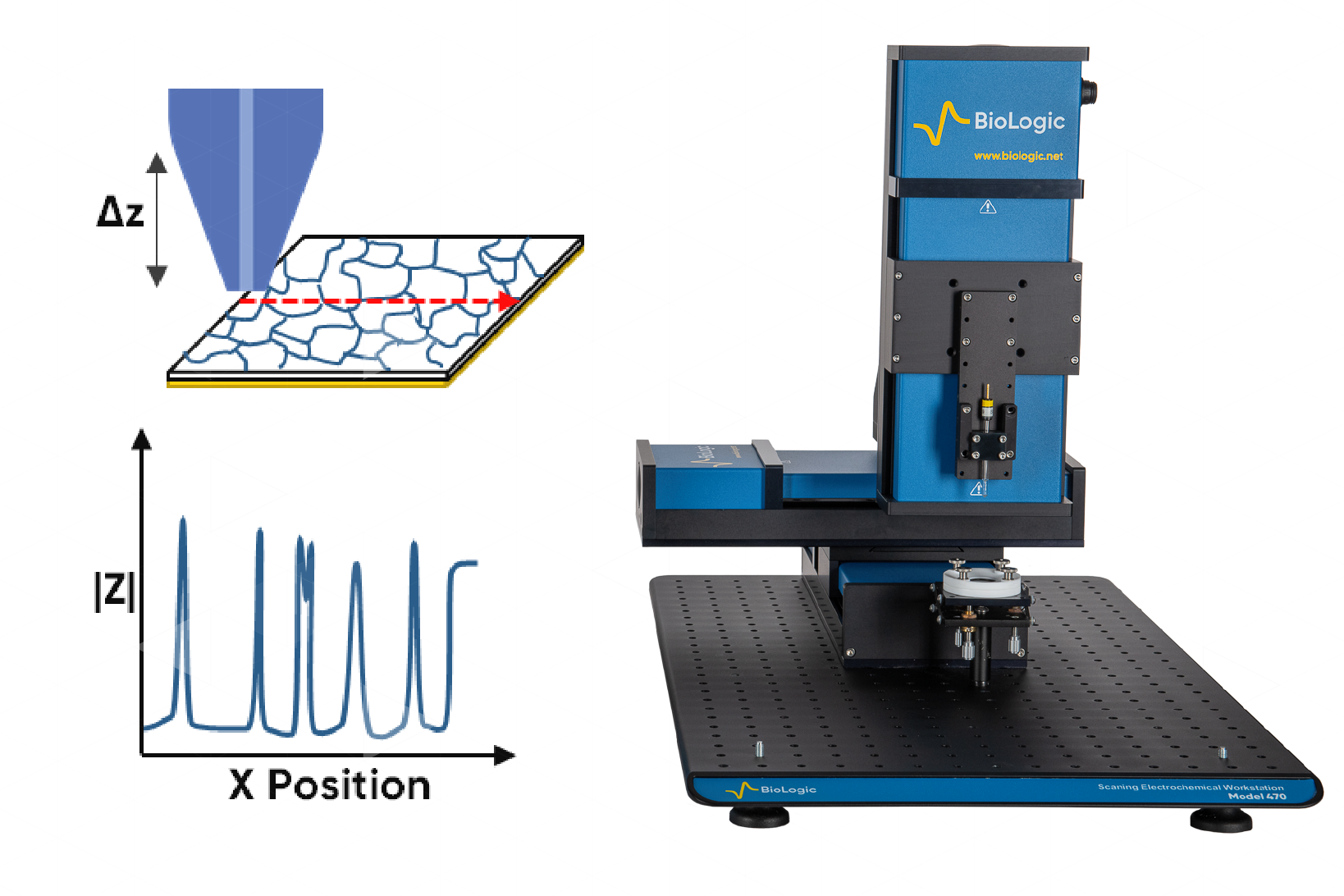
How is scanning probe electrochemistry used in battery research?
Scanning probe electrochemistry for battery materials and components research is introduced.
 Read the article
HPC: The importance of ultra-precision battery cyclers
As opposed to standard cycling techniques, High Precision Coulometry (HPC) measurements can provide a reliable estimation of battery lifetime quickly
- Read the article
Internal Resistance series. Part II: How to determine the internal resistance of a battery
This second in a series of 3 articles will help you to understand internal resistance and how it can be measured.
- Read the article
What is a battery cycler?
What should I know about battery testing equipment?
- Read the article
What is a potentiostat and its use in Science & Industry (Electrochemistry Basics Series)
What is a potentiostat? An article detailing every aspect of this versatile electrochemical multitool. Covers Potentiostat functionality and operation, the history of the potentiostat, uses and applications and the future of the potentiostat