Electrochemistry for materials research
Latest updated: October 16, 2026Materials research is an interdisciplinary field pulling expertise from chemistry, physics, and engineering. It covers many application areas including corrosion, energy storage and conversion, and catalysis. The materials being researched are also incredibly varied spanning metals, semiconductors, ceramics, and polymers, to name a few.
Materials research is not focused on the final system, but instead on understanding the properties of a material, with the aim of tailoring the material so its properties better suit a given application. New or improved materials may be studied with the aim of answering the question “How do the material properties affect its behavior?”.
How is electrochemistry used in materials research
The electrochemical measurements of interest in materials research will depend on the final application of the material under study, and the property of interest. Many of these have already been covered in previous articles, with a limited selection summarized in Table 1.
| Technique | Information of interest | Description | Further information |
| I-V (current-voltage) curve | Maximum current (IMP), maximum potential (VMP), maximum power (PMP), short-circuit current (ISC), open circuit voltage (VOC), fill factor (FF), efficiency (η or PCE) | Measures the current in response to an applied voltage | Perovskite Solar Cells: Electrochemical Techniques and Insights
|
| Mott-Schottky | Flat band potential, carrier density | Measures the capacitance-voltage relationship | Perovskite Solar Cells: Electrochemical Techniques and Insights
|
| DC conductivity method | Electrical resistance/conductivity of the sample | Measures the current in response to an applied voltage using a four-point measurement. | Electronic conductivity measurement – DC/AC methods
|
| AC conductivity method | Electrical resistance/conductivity of the sample | Measures the impedance of a sample in response to an applied sinusoidal current. | Electronic conductivity measurement – DC/AC methods
|
| Tafel analysis/ Linear Polarization Resistance (LPR) | Corrosion potential (ECORR), corrosion current (ICORR), polarization resistance (RP) | Measures the current in response to an applied voltage. For Tafel analysis a semi-logarithmic representation in used. | Corrosion basics: DC electrochemical characterization of a corrosion system
|
| Scanning Electrochemical Microscopy (SECM) | Map of local activity, specifically current or impedance | In dc-mode the probe, near the sample, is biased to interact with a redox mediator, mapping sample activity. In ac-mode an ac-bias is applied to a probe near the sample to map sample impedance. | SECM101: An Introduction to Scanning Electrochemical Microscopy
|
| Scanning Kelvin Probe (SKP) | Map of local Work Function (WF), or local corrosion potential (ECORR) | Measures and maps the Contact Potential Difference (CPD) between a probe and sample. CPD can be converted to WF, or ECORR | SKP101: An Introduction to Scanning Kelvin Probe |
The right pick for your materials research
Add the Materials research “Time line”
BioLogic offers a range of instruments suited to materials research. The best choice will depend on the requirements of your research, as outlined in the following sections.
Testing approach
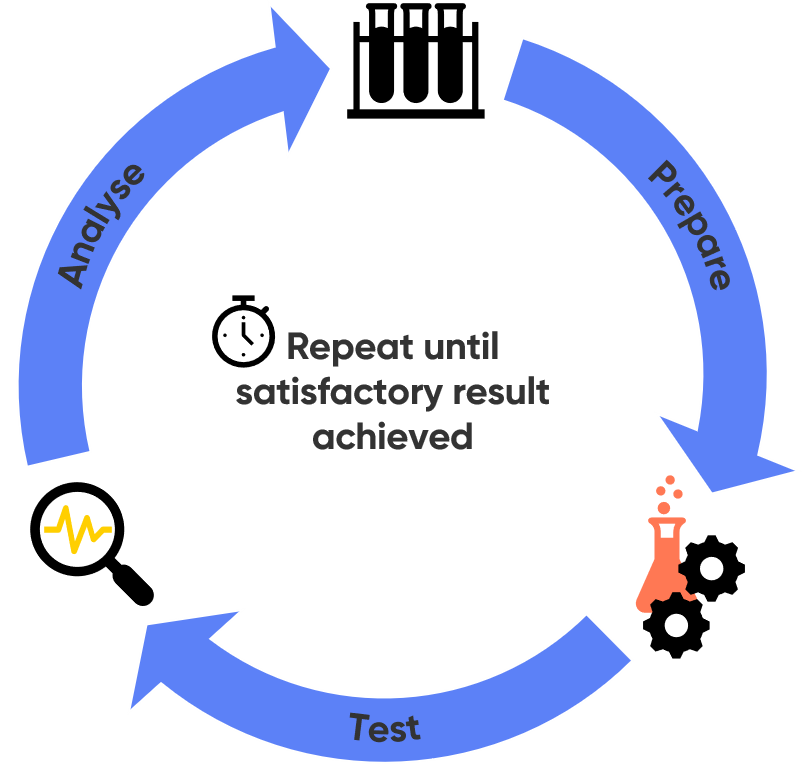
Figure 1: The iterative testing procedure is illustrated.
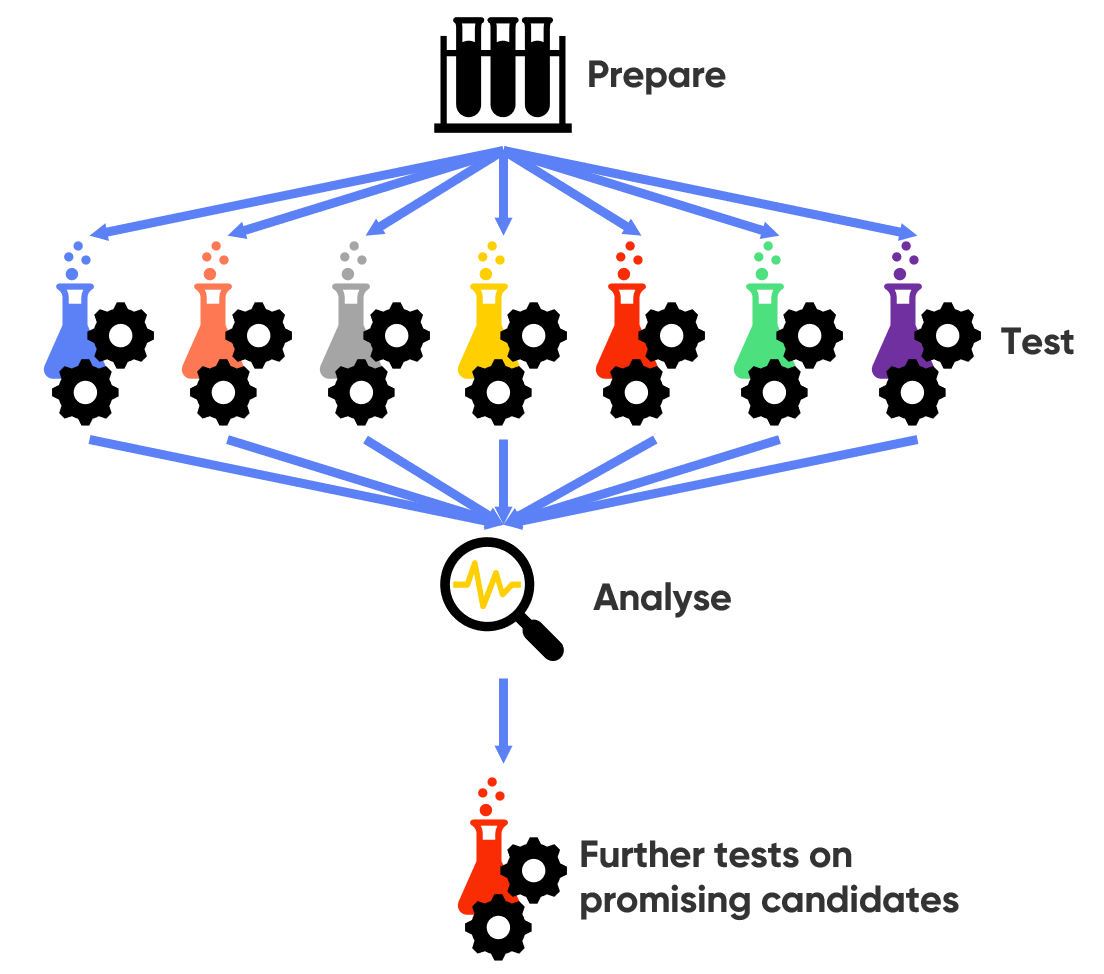
Figure 2: The high throughput testing procedure is illustrated.
Materials testing can be performed iteratively, where a material is prepared, tested, and analyzed before the next composition, Fig. 2, or in a high throughput manner, where many compositions are tested at once, Fig. 3. When iterative testing is of interest, a single channel potentiostat can be suitable. If, however, high throughput screening is of interest, a multichannel potentiostat should be considered. BioLogic’s Premium Multichannel Potentiostats allow up to 16 channels to simultaneously evaluate multiple samples under the same conditions using multi-electrode mode (CE to ground). For a deeper look at the differences between single and multichannel potentiostats please see this article. If a combinatorial library of samples has instead been prepared this can be investigated with high throughput screening using BioLogic’s M470.
Impedance studies
Impedance spectroscopy is one of the primary tools used in many materials labs to characterize the physical properties and/or chemical interactions of the material in a non-destructive manner. Our Premium EIS option allows impedance measurements up to 11 MHz, for characterization even at high frequency with outstanding accuracy. Where the material is capacitive in nature, for example polymers or solid electrolytes, it is recommended that the ULC-z is used to make the measurement less sensitive to the cell environment and remove parasitic impedance.
Temperature control
To fully understand the electrical properties of a material it can be important to perform investigations over a wide range of temperatures. It is especially beneficial to do this without needing to change instruments, to see how a given material behaves in real world conditions. Through the TCU Server, researchers can precisely synchronize the electrochemical and environmental parameters from EC-Lab® to control a number of third-party chambers climatic chambers and other temperature control units including BioLogic’s HTF-1100, and ITS-E.
Multimodality
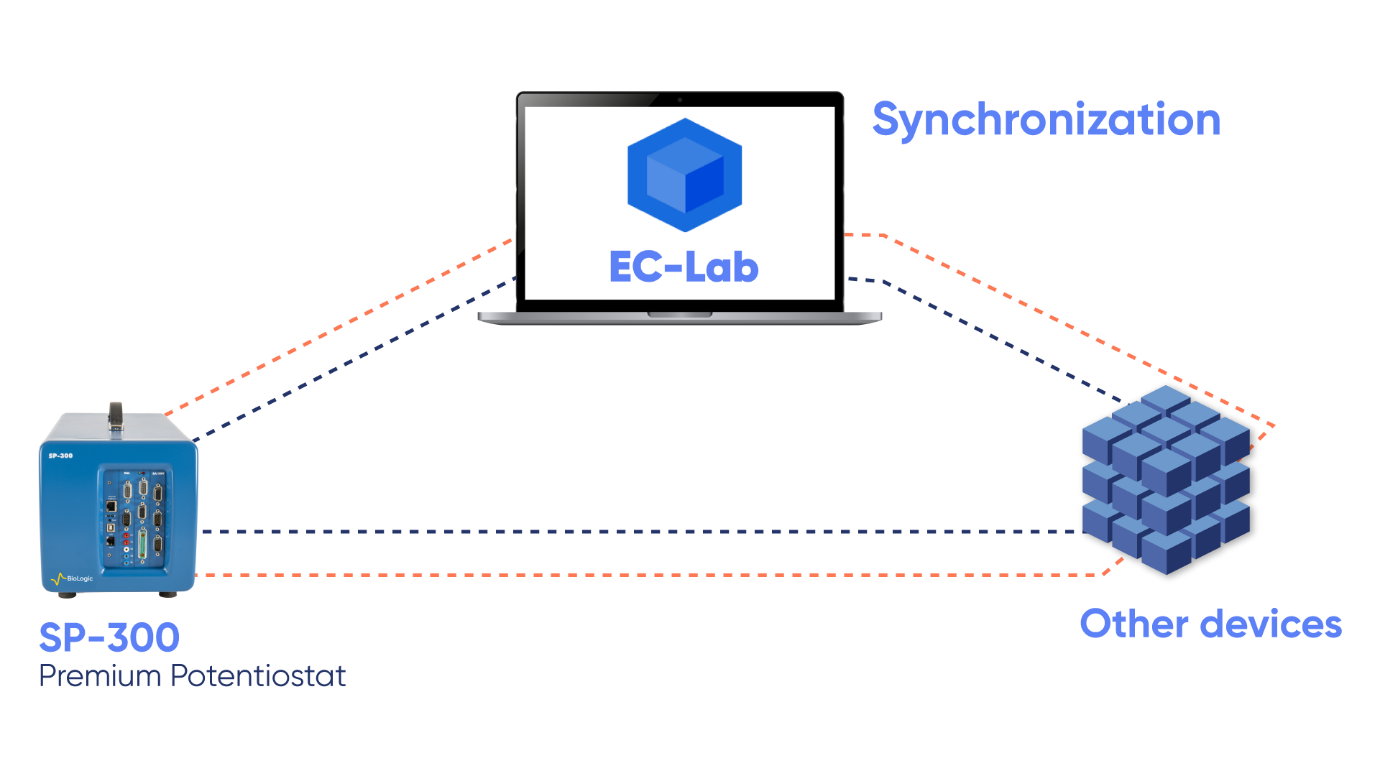
Figure 3: For multimodal experiments seamless coupling and integration of the potentiostat and other devices is vital.
In materials research it is important to understand the structure property relationship of a material. Electrochemical studies are often performed alongside other techniques such as microscopies. While each measurement can be performed separately this assumes that the electrochemical measurement does not have an influence on the sample structure, which is often not the case [1]. To truly elucidate the effect of an electrochemical measurement on the sample structure it is becoming increasingly common to combine electrochemistry with other analysis techniques, such as X-Ray Diffraction (XRD), and Transmission Electron Microscopy (TEM). Through our partnerships several existing solutions are available for these multimodal studies. Where a ready-made solution is not available researchers can use the EC-Lab® Integration Solutions for seamless coupling and multimodal measurements.
Bulk or local understanding
When studying a material, it is important to decide if a bulk or local view of electrochemical or electrical behavior is necessary. If a bulk view is necessary, the standard electrochemical techniques available with a potentiostat can be used. In some cases, a local understanding can also be obtained with a potentiostat only, through post experiment analysis, although this is still a generalization of the feature type. If, instead, truly local information is needed then the scanning probe electrochemistry techniques available using the M470 should be utilized. These techniques allow the local electrochemical behavior of a sample to be mapped, with the exact signal measured depending on the technique used.
Conclusion
Materials research underpins many of the applications which drive our modern world. To understand how a material will behave in many of these fields it can be essential to understand its electrochemical behavior, making potentiostats essential tools for this research. BioLogic offers a variety of solutions to address materials research, including modular multichannel potentiostats, and scanning electrochemical workstations.
References:
- Urso, M. A. Sani, R. G. Compton, K. Tschulik, M. Pumera, ACS Nano 20 (2026) 22362−22380